

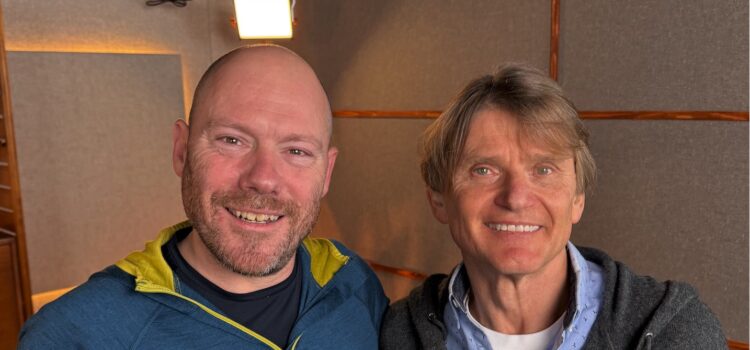
Almost 20 years after my Dragons’ Den pitch, I sat down with Richard Farleigh again. We opened with a friendly game of chess, then pressed record for his show, The Boardroom. It was a full circle moment. The last time we met was in 2006 under hot studio lights with five Dragons, a prototype, and a lot on the line.
This post is a longer companion to that conversation. If you have ever been told no in public, or felt a plan fall apart in your hands, I hope these notes help.
The day the strap came off
I walked into the Den with a new idea and no retail orders. My first container of Trunkis had landed two weeks earlier. I needed mentoring, marketing, and money. The pitch started well. Then a strap on the prototype came off. The moment was replayed on television for years.
It hurt. What mattered most was what happened after. I went back to the basics, listened hard to parents, and kept improving the offer. That was the beginning of a lesson I still share on stage today. A no can point you toward the work that really counts.
Brand beats features
Early on, I thought the case itself was the story. Over time I learned that the brand was the true asset. Features invite comparison. Brand creates meaning. It carries values, tone, and trust across new products and new markets. When we eventually sold the business, buyers valued the brand above anything else.
Pricing that survives the real world
If you plan to sell through retail, sanity check your pricing with a simple rule of thumb. Retail price is often about five times the fully loaded manufacturing cost. It is not precise, but it keeps founders from sleepwalking into broken unit economics. If you build only for a direct store and later hope to sell wholesale, you may find there is no margin left for a partner. Design with the full value chain in mind.
Where to make it, and why
We began in China. It was the fastest way to start. As the business matured we re-engineered Trunki so the parts clipped together without metal fixings. That made UK assembly viable and gave us more control, faster cycles, and a simpler bill of materials. There is no single right answer on location. The right answer is the one that gives you control of quality, cash, and lead time.
Cash flow, stock, and the pain you do not see
After the TV exposure we spent years chasing demand. Long lead times meant large orders. Large orders tied up cash. I remember walking a warehouse with racks of stock and a thin bank balance. Growth can look shiny from the outside and exhausting from the inside. Forecasts are always wrong. Build buffers. Protect working capital. Do not confuse popularity with liquidity.
Selling Trunki and starting again
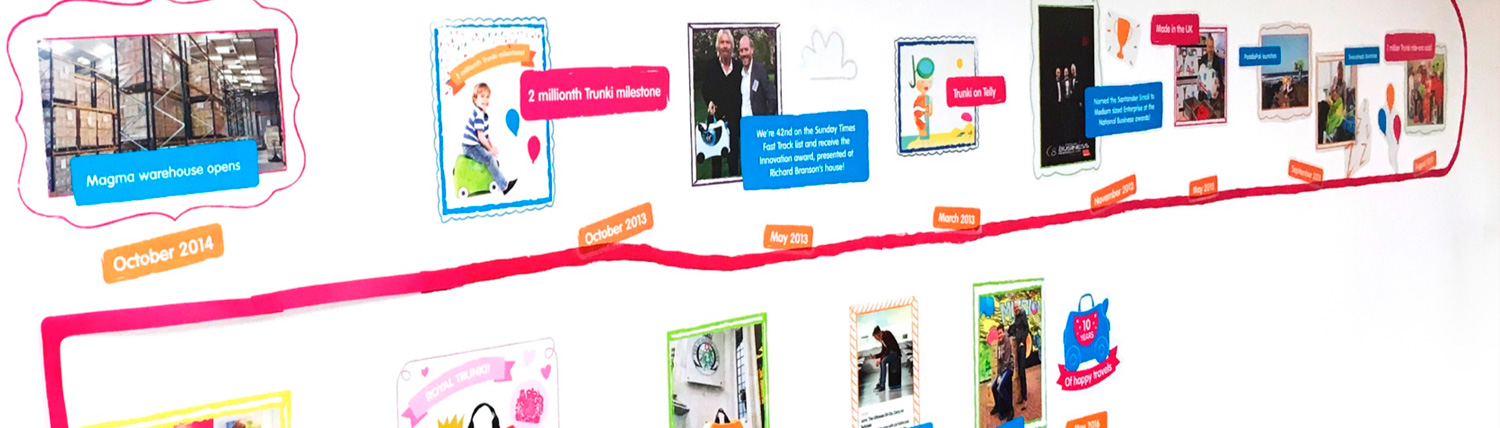
COVID hit travel. We survived, then rebounded, but our balance sheet and incentives no longer aligned with the investor structure. After 17 years I exited. I felt at peace. We had created a new category, reshored production, sold in over 100 countries, and put a lot of smiles in a lot of airports.
After a short rest and a house renovation, the itch to build returned. I co-founded Zeepy with my brother Dave. This time we are solving family sleep with a mix of hardware and audio. We write stories, build devices, and use AI as a tool to sense check scripts and streamline the work. It is a lighter business model with recurring content, smaller boxes, and shared load. The second time round is still hard. It is also more fun.
The personal engine behind the work
I live with cystic fibrosis. I lost my twin sister as a teenager. Those experiences gave me a clear choice early in life. Choose life and make the most of time, or step back and let fear lead. I built a habit of gratitude. I focus on what I can control. I move on quickly when things break. None of that removes pain. It does give you a way through.
What a public no taught me
-
A no can be a mirror. Look for the real work it is pointing to.
-
Brand compounds. Features do not.
-
Price for the path you want to take, not the one you hope will magically work later.
-
Reduce complexity until you can see your cash, your quality, and your lead time clearly.
-
Build allies. A coach, a co-founder, or a community will save you years.
-
Gratitude is not soft. It is a practical tool for resilience.
Watch the conversation
If you want the full story, the strap moment, the category creation, the pricing rule, the reshoring journey, the exit, and the start of Zeepy, watch the episode of The Boardroom with Richard Farleigh. It is a candid look at the last two decades and what I learned the hard way.
A question for you
What did a no teach you that a yes never could? I would love to hear it.
If you are looking for a keynote on resilience, brand building, and product strategy, I speak regularly at founder and corporate events. If you want help at a more personal level, you can book a focused one-to-one via Open Intro, or explore a workshop for your team.
Thanks for reading. Keep building.